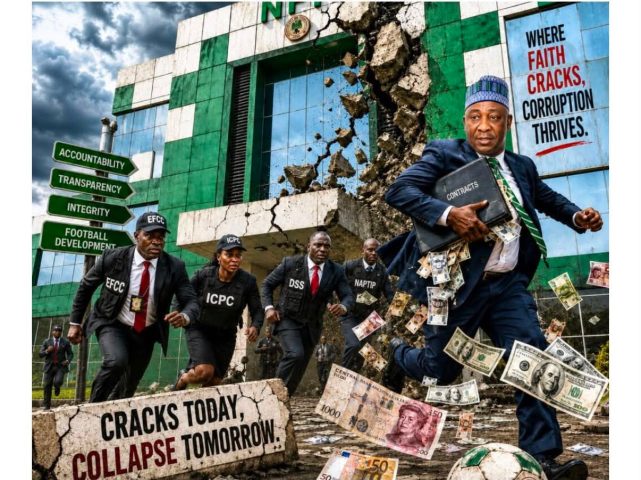
Former Super Eagles defender Abdullahi Shehu has reacted sharply to the resignation of Nigeria Football Federation (NFF) President Ibrahim Musa Gusau, declaring that the former federation chief “deserves” the outcome and questioning his achievements even in his home state of Zamfara.
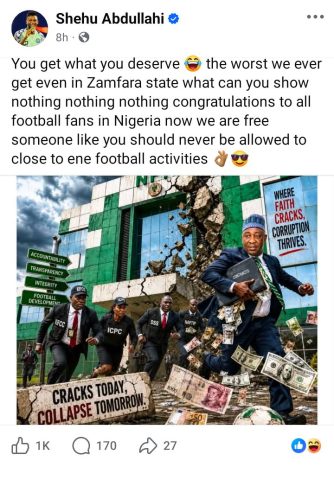
Shehu made the remarks on his verified social media handle on Thursday, shortly after Gusau announced his resignation as NFF President alongside General Secretary Dr Mohammed Sanusi and members of the federation’s Executive Committee.
In a strongly worded reaction, the former Nigerian international welcomed the leadership change and expressed relief on behalf of football supporters across the country.
“You get what you deserve 😂 the worst we ever get even in Zamfara state what can you show nothing nothing nothing congratulations to all football fans in Nigeria now we are free someone like you should never be allowed to close to any football activities 👌🏽😎”
The statement, while expressing Shehu’s personal assessment of Gusau’s tenure, comes against the backdrop of growing criticism of the NFF following a series of disappointing results by Nigeria’s national teams.
Gusau, who was elected NFF President in September 2022, announced his resignation at a press conference in Abuja, saying he had taken the decision after consultations with his family, friends and stakeholders and in the “overriding interest” of Nigerian football.
He said his departure was intended to create room for “a comprehensive and orderly reform process” to address longstanding institutional, governance and developmental challenges within Nigerian football.
The resignations have created a major leadership vacuum at the NFF less than a month before the federation’s scheduled elective congress in Lafia, Nasarawa State, on September 27.
Shehu’s Credentials in Nigerian Football
Shehu is a former Super Eagles defender and defensive midfielder who represented Nigeria at youth and senior levels. He made his senior international debut in 2014 and went on to feature for the national team, including at the 2019 Africa Cup of Nations. He was also part of Nigeria’s bronze-medal-winning Olympic football team at Rio 2016.
His criticism therefore comes from a former international player with direct experience within Nigeria’s national-team football structure.
The 33-year-old, who was born in Sokoto, also had a club career that included spells with Kano Pillars, União da Madeira, Anorthosis Famagusta, Bursaspor, Omonia and Levski Sofia.
Resignation Follows Series of Qualification Setbacks
Gusau’s resignation followed a difficult period for Nigerian football, particularly at national-team level.
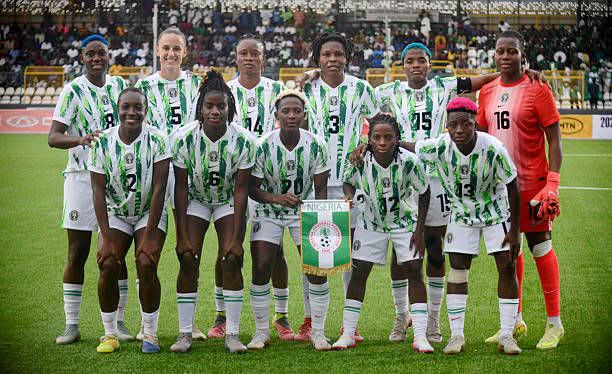
The Super Eagles failed to qualify for the 2026 FIFA World Cup, while the Super Falcons suffered an unprecedented setback by failing to qualify for the 2027 FIFA Women’s World Cup. Nigeria’s women had previously qualified for every edition of the Women’s World Cup since the competition began in 1991.
The latest setbacks intensified calls for changes in the administration and development of Nigerian football.
Gusau, however, maintained that his administration had recorded achievements in areas including coaching education, domestic league stability, refereeing and football infrastructure. He also pointed to Nigeria’s recent Africa Cup of Nations medal successes and the Super Falcons’ 2025 WAFCON triumph.
Tinubu Orders Football Reform
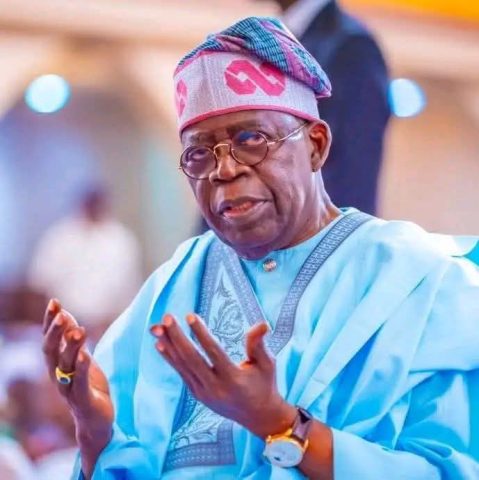
The leadership crisis has also prompted direct intervention from President Bola Ahmed Tinubu, who directed a comprehensive reform of Nigerian football.
Tinubu said the reform should address governance, administration, stakeholder representation, accountability, player-development pathways and domestic competitions.
The President also directed the National Sports Commission to work with the NFF Secretariat and relevant stakeholders to ensure continuity in football administration while facilitating a broad and consultative reform process.
The process is expected to involve engagement with FIFA and CAF while ensuring Nigeria remains compliant with its international football obligations.
With Gusau and other senior officials now out of office, Shehu’s comments add to the growing public debate over the direction of Nigerian football and the type of leadership required to restore confidence in the country’s football administration.
For many stakeholders, the immediate challenge will be to ensure that the transition does not further destabilise the game, while the proposed reforms produce a transparent, accountable and technically stronger football system.
Isaac Zaza is a versatile Nigerian sports journalist, digital media entrepreneur, and web developer. He is the Founder and Chief Executive Officer of **Zaza Media**, a growing digital platform dedicated to delivering timely sports updates, news, and media content through its official website, `zazamedia.com.ng`.
Before establishing his independent media outfit, Isaac built a solid reputation as a prolific digital content creator and sports writer. He previously served as a verified contributing author for prominent news aggregators and sports publications, including **Opera News**, **Scooper News**, and **Futball Naija**. Through these platforms, he honed his expertise in analyzing sports trends, breaking football news, and engaging millions of digital readers across Nigeria.
Combining his editorial background with technical expertise, Isaac is also an accomplished website builder, designing and managing digital infrastructures that optimize user experience and content delivery.
Known widely and highly influential across social media platforms—particularly on Facebook under his brand name **Isaac Zaza**—he leverages his vibrant online presence to connect fans with the latest happening in the sporting world. As a media professional, Isaac continues to drive innovation at the intersection of sports journalism and digital technology.
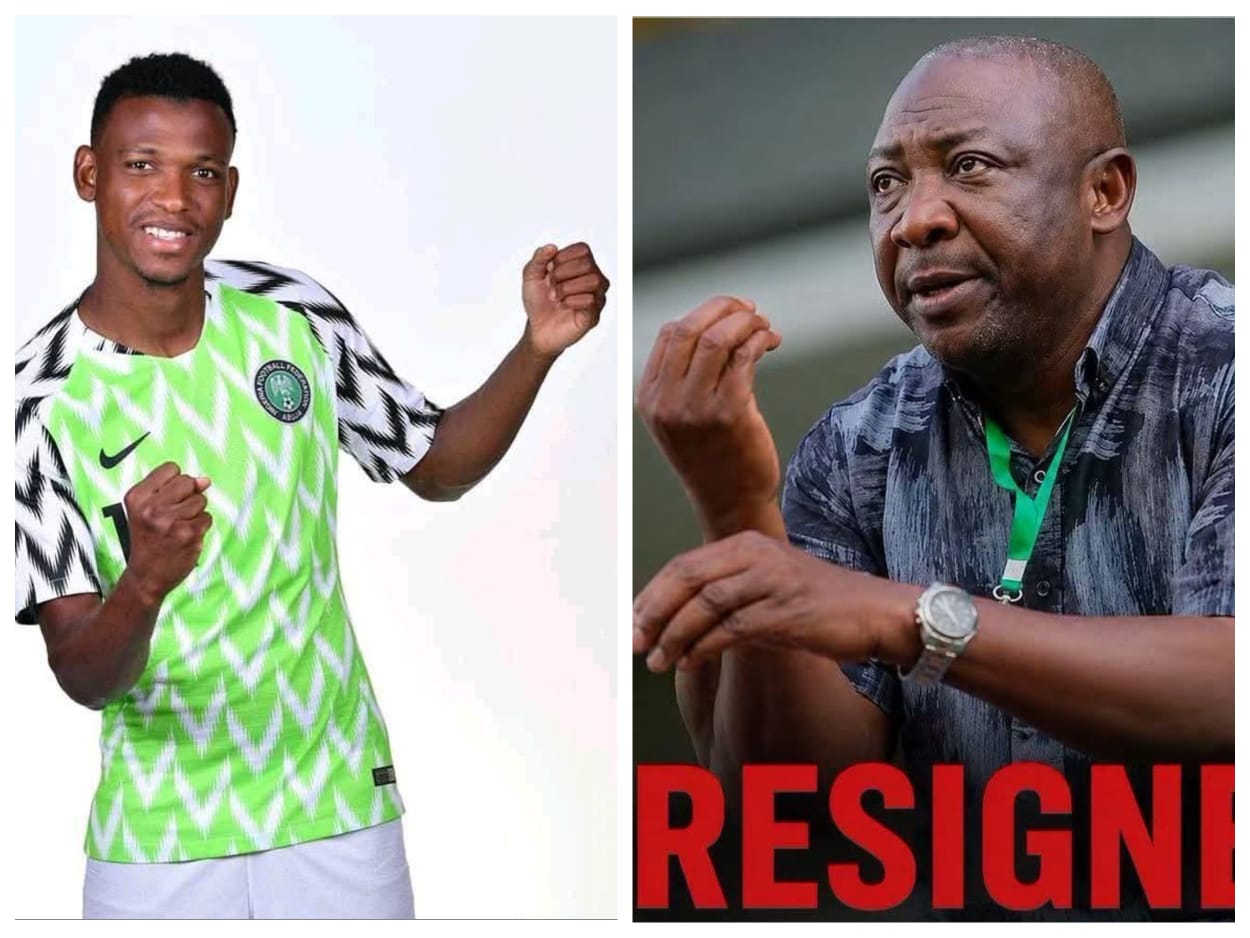





 President Ibrahim Musa Gusau, declaring that the former federation chief “deserves” the outcome and questioning his achievements even in his home state of Zamfara.)