
By Oluchi Tobex Tobe-Chukwu
In the high-stakes world of sports administration, leaders are often measured by medals won, budgets managed, and policies implemented. Yet, since assuming office as Director General of the National Sports Commission (NSC), Hon. Bukola Olopade, working in seamless collaboration with NSC Chairman Mallam Shehu Dikko, has introduced a more transformative benchmark to Nigerian sports administration — the metric of humanity, trust, and athlete-centered leadership.

Today, Nigeria is not merely witnessing an administrative transition; the nation is experiencing a full-scale sports renaissance.
Driven by the Federal Government’s Renewed Hope Agenda, the National Sports Commission is proving that sustainable international success begins with prioritizing the welfare, confidence, and aspirations of athletes at home. The new leadership has shifted the focus beyond podium finishes to building a comprehensive ecosystem where athletes are identified, nurtured, protected, and empowered to thrive.
Hon. Bukola Olopade is no stranger to transformational leadership. Across the African sports landscape, he is widely respected as a visionary strategist and innovative administrator whose track record continues to redefine sports governance. From his impactful tenure as Ogun State Commissioner for Sports, where he laid enduring foundations for grassroots sports development, to his remarkable achievements in the private sector as the architect of the globally celebrated Access Bank Lagos City Marathon, Olopade has consistently demonstrated that sports is not merely recreation, but a viable and thriving economic industry.
His passion for inclusivity was equally evident during his time as President of the Nigeria Wheelchair Basketball Federation, where he championed the growth and recognition of para-sports. Upon his appointment to lead the National Sports Commission, he brought to the national stage the same rare blend of administrative excellence, innovation, and empathy.
From identifying and engaging diaspora talents such as teenage sensation Annabelle Fasuba, to standing firmly beside elite athletes during difficult moments, including stars like Favour Ashe and Favour Ofili, the message from the current administration is unmistakable: no athlete is too distant to be discovered, and no champion is too vulnerable to be supported.
The Olopade-Dikko Scorecard
The achievements recorded under the Olopade-Dikko leadership underscore one of the most progressive periods in Nigeria’s modern sporting history.
Elite Medal Haul
Team Nigeria has enjoyed remarkable dominance on the international stage, winning over 350 global medals across various competitions. Highlights include an outstanding 16-medal sweep at the African Cycling Championships in Abuja, alongside notable accomplishments in aquatics and other sporting disciplines.
Global Qualification Successes
Following impressive performances at the World Athletics Relays, Nigeria secured three crucial qualification tickets for the 2027 World Athletics Championships in Beijing. Similarly, the nation’s U-20 women’s football team successfully overcame Malawi to secure qualification for the FIFA U-20 Women’s World Cup in Poland.
Historic Private Sector Investment
Through aggressive private sector integration and stakeholder engagement, the NSC has attracted over ₦50 billion in private capital — the largest private sector commitment in Nigerian sports history. This milestone signals growing investor confidence in the future of Nigerian sports development.
Restored International Confidence
Nigeria’s credibility within the global sporting community has significantly improved under the current administration. This renewed confidence earned the nation hosting rights for the prestigious 48th CAF General Assembly as well as the highly anticipated 2026 CAF Awards.
Grassroots Development and Structural Reforms
Beyond elite performances, the NSC leadership has revitalized grassroots sports development and institutional growth across federations. From the successful staging of the high-standard Super 4 Tournament in Ikenne to the expansion and professionalization of the Nigeria Netball Federation, the signs of progress are increasingly evident.
The Nigeria Taekwondo Federation also received global recognition following the endorsement of its domestic activities by World Taekwondo Masters Union representative Master Kim Lee during his symbolic visit to Nigeria. Similarly, strategic retreats and developmental initiatives within the Badminton Federation are positioning the sport for long-term growth and technical advancement.
Even amid prevailing economic realities, Hon. Olopade has demonstrated commendable pragmatism and strategic foresight. The forthcoming Coal City National Sports Festival in Enugu is being carefully aligned with modern international models such as the streamlined Glasgow Commonwealth Games template, focusing on 20 high-impact sports to ensure sustainability, efficiency, and greater developmental value for participating states.
The National Sports Commission has also deepened collaboration with sports federations to improve technical development, governance standards, and operational efficiency — evident in the revival and renewed visibility of sports such as netball, badminton, and taekwondo.
Under the leadership of Hon. Bukola Olopade and Mallam Shehu Dikko, the National Sports Commission has fundamentally rewritten the narrative of Nigerian sports.
Nigeria is no longer simply producing champions; the country is now intentionally building a sustainable sports ecosystem that identifies talent early, supports athletes consistently, attracts investment confidently, and honours the sacrifices of its sporting heroes.
The renaissance is here. The foundation is solid. And for the first time in many years, the future of Nigerian sports shines with unmistakable promise.
Oluchi “Tobex” Tobe-Chukwu is the Media Aide, Strategic Communication to Hon. Bukola Olopade, Director General, National Sports Commission.
@highlight
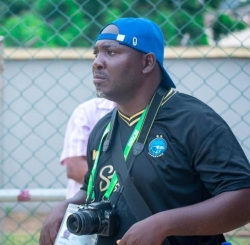
Before establishing his independent media outfit, Isaac built a solid reputation as a prolific digital content creator and sports writer. He previously served as a verified contributing author for prominent news aggregators and sports publications, including **Opera News**, **Scooper News**, and **Futball Naija**. Through these platforms, he honed his expertise in analyzing sports trends, breaking football news, and engaging millions of digital readers across Nigeria.
Combining his editorial background with technical expertise, Isaac is also an accomplished website builder, designing and managing digital infrastructures that optimize user experience and content delivery.
Known widely and highly influential across social media platforms—particularly on Facebook under his brand name **Isaac Zaza**—he leverages his vibrant online presence to connect fans with the latest happening in the sporting world. As a media professional, Isaac continues to drive innovation at the intersection of sports journalism and digital technology.
- HFN President Felicitates Ardova Chairman Sowami on Birthday - August 31, 2026
- HFN President Jibril Saidu Ojih Applauds Ardova PLC for Extending Handball Premier League Sponsorship - August 31, 2026
- “We Needed That Win to Stay in the Fight”: Fizdale Declares D’Tigers ‘Within Striking Distance’ After 100-84 Demolition of Cape Verde - August 31, 2026






, Hon. Bukola Olopade, working in seamless collaboration with NSC Chairman Mallam Shehu Dikko, has introduced a more transformative benchmark to Nigerian sports administration — the metric of humanity, trust, and athlete-centered leadership.)